Categories
Uncategorized

These 13 States Might Eliminate Property Taxes in 2026

Summary of article written by Allaire Conte for realtor.com

The mounting economic frustrations of the past two years have reached a breaking point, sparking a full-scale property tax revolt across the United States.

In 2026, 13 states, including Illinois, are actively debating proposals to fundamentally dismantle the property tax system. While the U.S. has seen similar movements before—most notably California’s landmark Proposition 13 in 1978, which capped rates and assessments—experts suggest the current movement is different due to its sheer scale and the number of states acting simultaneously.

Lawmakers are currently considering a range of radical changes, including:

  • Full Repeal: Phasing out property taxes entirely.
  • Homestead Exemptions: Carving out massive tax breaks for primary residences.
  • Service-Based Swaps: Shifting local funding to other revenue sources.

The stakes for local communities are enormous. Property taxes currently serve as the backbone of local funding for schools, roads, and emergency services. Because a total replacement of this scale has never been attempted before, critics warn that dismantling the system without a “bulletproof” transition plan could lead to budget chaos and hidden costs for taxpayers.

[Read the full article by Allaire Conte on realtor.com]

Categories
Uncategorized

Nobody Asked Me But…A New Rockford Slogan and 1 Million Starter Homes


By Dennis Sweeney, Executive Vice President, HBA of Rockford

Back in the 50’s, the canopy of stately elm trees covering many of Rockford’s main streets resembled the barrel-vaulted ceilings of a cathedral, and Rockford was known as “The Forest City.” Along came the Dutch elm tree disease, and those stately elm trees have disappeared.

Next came the emerald ash borer, and many local golf courses have temporarily taken on more of a links course look than the traditional Midwest appearance following the removal of the diseased ash trees.

“The Forest City” forest has been decimated.

“At the Top in Illinois” was another slogan for Rockford. It was an acknowledgement of its geographical location in the state, as well as the highest concentration of manufacturing jobs per capita in the state, before housing affordability became a ranking priority.

Given the Rockford market’s current notoriety as the fifth-best market in the nation for move-in buyers to immediately buy a house, and that we’re located in Illinois, the state with the fifth-highest out-migration in the nation, Rockford should have a new nickname: “The Affordable City.”

Two home building giants, Taylor and Lennar, have announced that they are going to build 1 million starter homes to get first-time home buyers into the market. Before anyone has seen their subdivision plans and density, floor plans, allowances list, special financing plans, price points, etc., the “Yes, buts…” have already begun.

The concern is that it will deflate the local existing home market with new homes that are less expensive and more attractive to own. But not without adapting new technology, in my opinion. Their purchasing power and mass production of identical units, with their own employees, will produce economies of scale in their production schedule, and time is money.

But these companies still need to make money. With the run-up in material costs and labor costs over the past five years, they will be hard-pressed to stick build a new house with the lot size, the living area, and the amenities that a first-time home buyer who has been priced out of the market expects in a new house and can afford to buy.

There is a technology available that hasn’t been widely used yet that might provide enough cost savings to get close to the price point needed. That is the printer technology used to “frame” new homes with robot machines pouring liquid walls, serviced by one or two technicians monitoring the machine pour. Chemists instead of framers.

These million homes could be the experimental laboratory.

Categories
Uncategorized

Nobody Asked Me But… Recent Natural Disasters are a Test of Local Staying Power for Residents

By Dennis Sweeney, Executive Vice President of the HBA of Rockford

On the heels of the tragic pictures of the hurricane natural disaster in Florida and North Carolina are tragic pictures of the wildfire disaster in Southern California. The latter are stunning. For block after block, there are piles of ashes. Nothing recognizable is left of homes and businesses except the chimney. The incongruity of the video of a burning bank, with cars driving past on the street and no firefighting equipment present, was so bizarre. This doesn’t happen in the United States.

Recent year-over-year national home price appreciation statistics show the adverse impact that repeated hurricane hits have had on the Gulf Coast of Florida around Fort Meyers and Cape Coral. Year-over-year average property values have decreased. Not every property has decreased in value, but enough have decreased in value to pull down the average. That is significant.

Reasons given are: 1) cutting losses and moving to a different location 2) inability to obtain affordable home owners insurance 3) inability to obtain a mortgage 4) tired of cleaning up and rebuilding 5) any combination of the above. And Florida is considered a good state to live in for the cost of living, taxes, and public sector services and expenses.

Now comes the total destruction of communities in southern California, which like Florida is a very desirable place to live, but more expensive in terms of taxes and other public sector expenses and the cost of living. As a result of state caps on insurance premium increases following previous natural disasters, insurance companies were already pulling out of California before this disaster. This impacts the ability and willingness of the residents to stay and rebuild. Billions of dollars of property value are off of the tax rolls for years. If you can’t get insurance, then you can’t get a mortgage. And just like Florida, there will not be much that the government can do to make them change their minds.

Categories
Article Building Industry

Nobody Asked Me But… Housing to Become Less Government & More Market Driven

By Dennis Sweeney, Executive Vice President HBA of Rockford

The incoming administration has made its stance on inflation clear: deregulation will be the primary tool to address it. Another potential strategy might involve cutting government waste and inefficiency, which could reduce spending and the deficit—provided that the savings aren’t redirected elsewhere. However, this approach will be harder to execute. Congress often prioritizes spending as a way to demonstrate its effectiveness to voters. In closely contested elections, incumbents typically highlight tax dollars and government programs brought to their districts in campaign materials. Rarely, if ever, do candidates claim success by avoiding spending taxpayer money.

As of this writing, no announcement has been made regarding the next Secretary of Housing and Urban Development. A well-connected friend shared that Bill Pulte, a prominent figure in the national homebuilding industry, is vying for the role. Pulte, who represents the large-scale, publicly traded housing sector, brings deep industry knowledge. However, such major players can sometimes overlook the burdens of regulations since their size allows them to absorb the costs more easily than smaller builders constructing 10–20 homes annually. Regulations drive up costs, creating barriers to entry, which in turn reduces competition. Historically, housing affordability has been driven by two factors: the cost of land and strong competition for new home buyers.

Two areas of deregulation could have an immediate impact on housing: energy and banking/lending. Federal energy mandates dictating how new energy-efficient homes must be built have proven both inefficient and costly. While some energy requirements have been rolled back due to implementation challenges, the damage to new home construction has already been done. Meanwhile, the housing finance industry is still grappling with the lingering effects of the Toxic Asset Relief Program and the 2008 housing crisis. There is room to ease banking regulations in ways that don’t encourage reckless lending or home buying.

The pent-up demand for housing is well-documented. By cutting regulations, reducing inflation, and lowering the cost of homebuilding, the stage could be set for a housing boom.

Categories
Article Building Industry

Nobody Asked Me But… It’s “Never Let a Crisis Go to Waste” Time

By Dennis Sweeney, Executive Vice President of HBA of Rockford

Back-to-back hurricanes have slammed the southeastern United States. Hurricane Helene brought catastrophic 1,000-year flooding inland to the Appalachian Mountains in Georgia, South Carolina, Tennessee, and North Carolina, and next, Category 5 hurricane Milton delivered catastrophic storm surges to the west coast of Florida south of Tampa. The entire Gulf coast of Florida got hit by one or both.

The mud hasn’t even dried and the blame game for the destruction that could have, would have, should have been prevented if only governments at all levels had implemented stricter building codes and land use codes is starting. In North Carolina, home builders are a major political force and their opposition to code proposals that would increase the cost of housing is now under attack. Never let a crisis go to waste when you can advance your policy agenda. There are no codes that are going to protect a conventional, brick, stick, block, metal, etc., built house from a Cat. 5 Hurricane, the 1,000 year flood, an F-5 tornado, or a 8.0 earthquake. The force of nature is to level everything; some events are faster than erosion.

What has been occurring for the past few years in the areas that have been repeatedly hit by catastrophic storm damage is that private sector market forces are determining what gets rebuilt and where. Insurance companies are pulling out of states with high storm claims experience. Homeowners with the financial means to do so are self- insuring, or,
raising their deductible to a higher level to make their insurance more affordable. Those with a mortgage and unable to obtain or afford insurance are trapped; it’s a buyer’s market if you have cash and can self – insure.

Florida has one of the strictest builder licensing procedures in the United States. Builders have to prove they know what they are doing, at least on paper. If the houses that were destroyed do get rebuilt, they will now have to meet the current building codes, not the code when it was originally built. The same is true for North Carolina. And, if the lenders
will not make a loan or the insurance market will not insure a new house in that location for an affordable premium, then the free hand of the market place and not the iron hand of the government, has made that decision.

Categories
Uncategorized

Builder’s Scramble Golf Outing a Big Success!

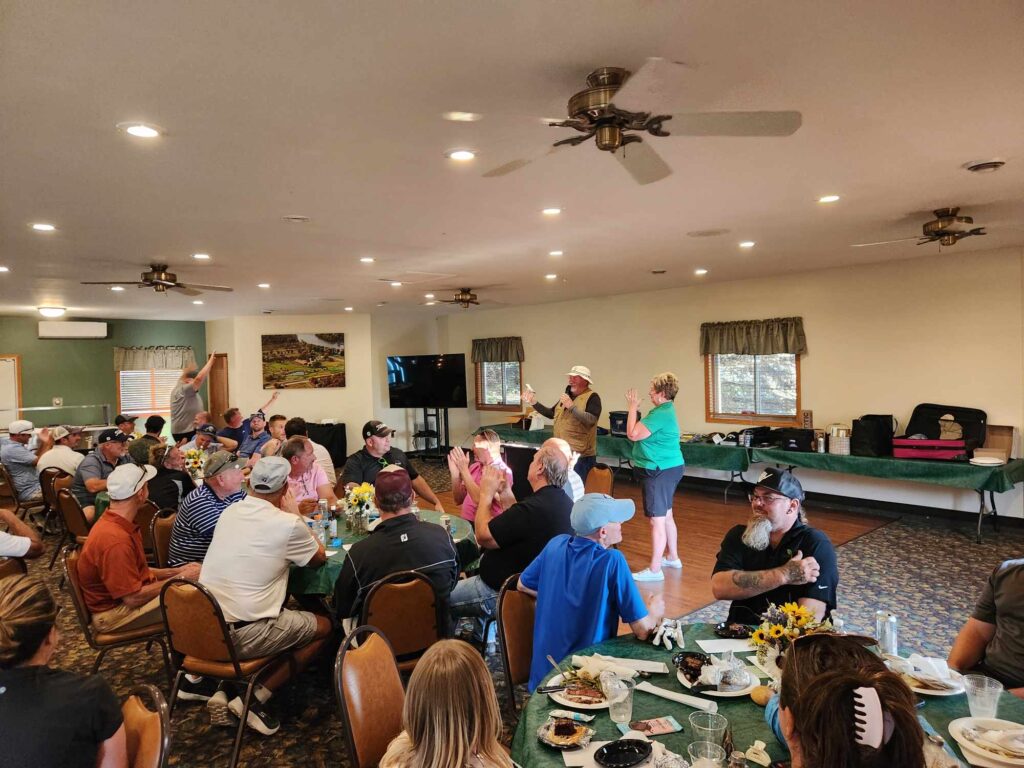
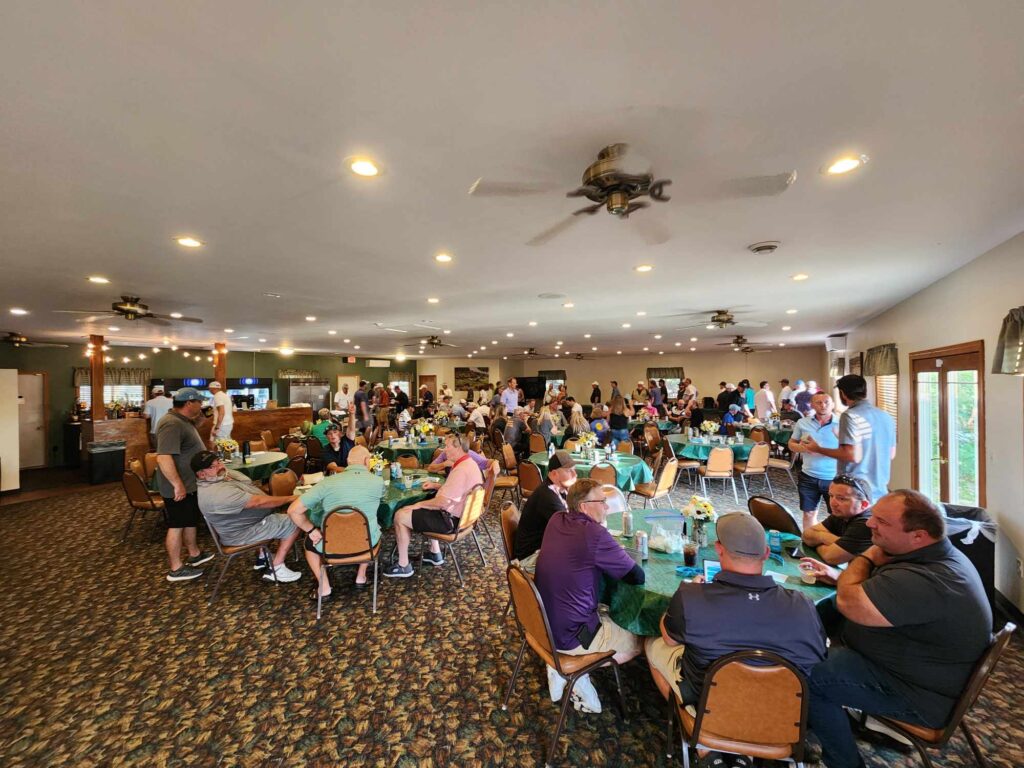
We had a great turnout at the 2024 Builders Scramble at PrairieView Golf Club! ⛳️ It was a beautiful day on the course, and what better way to end the day than with a delicious steak dinner.
Thank you to everyone who came out for a day of golf and camaraderie. A special shout-out to all of our sponsors who make this event possible. Congratulations to all the contest and door prize winners—we hope you enjoy your prizes! 🏆

The 2024 Builders Scramble Golf Outing was held on Monday, September 9th at the PrairieView Golf Club in Byron, IL. PrairieView is a challenging 18 hole layout. Following golf, a ribeye steak dinner was served in the air conditioned PrairieView Pavilion featuring full bar beverage service with the best customer service staff you will ever meet. Following dinner, contest prize winners were announced and door prizes compliments of the hole sponsors and generous donations by HBAR members were handed out.

SCHEDULE:
10:00 AM – Registration
11:00 AM – Shotgun Start
5:00 PM dinner & awards program in the Prairie View Pavilion, w/ comfortable indoor & outdoor seating & full-service bar

Categories
Article Building Industry

Housing Affordability: A Cost & Supply Problem

By Dennis Sweeney, Executive Vice President of HBA Rockford

The affordability of housing for a new single-family home, a duplex, or a condominium has little wiggle room. The cost of the house begins with the cost of the land, reducing lot sizes and increasing housing density has a limit. I refer to the builder in Georgia who commented about affordable housing: “They cost just as much to construct as any other house; the only thing that makes them affordable is the subsidies to build them or live in them”.

The current cost to build a new house with the amenities buyers expect in a new house in this market, according to local builders, is in the range of $270 per square foot plus the lot. So, the popular 1,800-square-foot ranch house is now at $486,000 plus a lot. There are not many first-time home buyers with the down payment and the income for a new $486,000 house. To complicate the supply issue, existing home owners are already living in comparable homes with lower (affordable) assessed market values (lower property taxes) at lower interest rates (3%–4%) and aren’t going to sell to move to a much more expensive house with higher taxes and a higher interest rate.

The 2021 national median value of new homes was $429,205, and the median value of homes purchased by a first-time buyer was $271,445. First-time home buyers do not buy new homes.

More than half of recent buyers put no more than a 20% down payment on the homes they purchased. Around 18% of all buyers purchased a home without a down payment in 2021; 50% had a down payment of 0 to 20%; and only 16% put more than 20% down. First-time buyers had relatively smaller down payments. Approximately 82% of first-time home buyers put no more than 20% down, including the 18% of home buyers with a zero-down payment.

Housing affordability will continue to be an issue until mortgage rates and building costs drop enough to entice existing home owners to sell and move up into a new home. That is how building new housing solves the affordability issue.

Categories
Article Building Industry

Nobody Asked Me But… Is Rockford Affordable?

By Dennis Sweeney, Executive Vice President of the HBA of Rockford

Affordability starts with the cost of land. This market starts with that positive advantage.

The median home list price in Rockford is $152K, and 86.5% of homes are priced below $250K. The condition of these “affordable” houses may be why they are so affordable. Buy existing for under $250K, but then spend $50K more to clean it up and make needed repairs. That’s the rest of the story. One reason houses here are more affordable is because property taxes are so high, which keeps home prices down. If buyers could transfer $100, even $50, from the property tax portion of their monthly payments to the principal and interest portion of their payments, they could purchase more houses, new and existing, and they would.

What puts the Rockford market in a better, positive light is that it is a city with good infrastructure and more robust business and manufacturing economic activity than Flint, MI, and Youngstown, OH. I have been to Youngstown, OH, a couple of times for college football games. Lincoln Ave. in Youngstown is similar to Harlem Blvd. and National Ave. in Rockford. The last time I was there 2006-2007, many of the houses on Lincoln Ave. had plywood covering their windows and doors. That is a depressing sight, leaves a lasting impression, and definitely pulls down the cost of what was once very nice housing. It hasn’t gotten that bad here yet.

There are many elements to our affordability. Such as the previously referred-to property taxes. Which makes people from out of state arrive thinking that they can buy a $250K house. But when they see the property tax bill, they have to change their home buying budget. That $250K deal comes with an asterisk and some important small print.

Illinois is losing its population. Fewer people means less demand for houses, which creates lower prices. The aging population is often in a mortgage-free home, and if they do sell, it’s to move to a friendlier retirement state for weather and taxes, or into a retirement facility.

How these market factors balance out impacts our affordability.

Categories
Article Building Industry HBA Members

Nobody Asked Me But… Housing Regulations Create Market Dysfunction

By Dennis Sweeney, Executive Vice President of HBA of Rockford

The United States boasts of its free market economy which encourages and stimulates innovation, competition and market driven efficiencies were supply meets demand. This market driven economy was very successful in the roaring 80’ and 90’s for housing production. The Rockford, IL housing market was an excellent example of this competition as it was one of the most affordable housing markets in the entire nation while producing 1,000’s of homes each year by 100’s of private contractors for first time new home buyers up to executive new home buyers. There are Parade of Homes plan books to prove it.

The growing costs of government regulations and fees has created a dysfunctional housing policy “ax knot” which is going to be very difficult to untie. Sometimes the only way to undo it is with an ax.

Here is the short list of regulation grievances through the years starting with school impact fees, excessive connection fees, land use and zoning requirements, septic system requirements, and environmentally driven federal building code mandates (mandatory EV charging station wiring), are some of the most costly. All of these, combine to push the cost of new housing higher, dampening demand, and then, the lack of new housing supply, pushes the cost of existing housing higher. Winnebago County property owners received their new property value assessments last week. The cost of housing is going up.

As has been pointed out in previous articles the past few weeks, the United States is 6.5 million housing units behind household formations. This lack of housing supply for the housing demand should be met by the housing industry in the market place because there is money to be made. However, it has become apparent that the housing industry is not confident that it can profitably build those needed housing units where they are needed. Uncertainty has a dampening effect on home building.

Which brings me to the article on page 2 that the FHFA is considering rent regulations and controls to keep rents affordable. Given the history of rent control policies at the national and local levels, it’s difficult to understand how they expect this to be the solution for solving the most pressing housing problem – not enough housing units. The uncertainty in the market and the regulatory costs have led us into this policy “ax knot”. Rent controls are not going to encourage the construction of sorely needed housing units that would be impacted by such a policy.

Categories
Article Building Industry HBA Members

Housing starts: Construction Numbers Slip in June After a Bullish May

By: Gabriella Cruz-Martinez

Housing starts, which include new single- and multi-family units, decreased to a seasonally adjusted annual rate of 1.434 million units in June, according to the Census Bureau, down 8% from May’s revised rate of 1.559 million units. That was 8.1% below a year ago and under the 1.480 million units economists had predicted.

New construction was up a whopping 21.7% in May over April.

Permits to build were at an annualized rate of 1.440 million units in June, 3.7% below May’s revised rate of 1.496 million units, with modest increases in applications on the single-family and multi-family sides. The figure came in lower than the expectation of 1.500 million.

The shortage of previously owned homes for sale has given homebuilders an edge in today’s market, as they’ve continued to ramp up construction of new units in recent months. But that may not last.

Rising costs of imported raw materials such as aluminum, softwood lumber, and steel could cause delays in new builds, the National Association of Home Builders (NAHB) found.

“The lack of resale inventory means prospective home buyers who have not been priced out of the market continue to seek out new construction in greater numbers,” NAHB chief economist Robert Dietz wrote in his Eye on Housing blog.

Single-family housing starts in June dropped to a rate of 935,000, 7% below May’s revised estimate of 1,005,000. On the multi-family side, starts in June were 482,000, also down from approximately 624,000 from the month prior.

At the same time, building permits for single-family home construction rose to a seasonally adjusted annual rate of 922,000, up 2.2% from May’s revised rate of 902,000.

Building permits for multi-family homes were at a rate of 467,000 in June, down from approximately 542,000 the previous month.

New construction has become a larger part of today’s housing market. More than a 33% of homes on the market this spring were new construction, the NAHB estimated. That share is historically 13%.